How to grow Siberian Squill in the UK
Scilla siberica
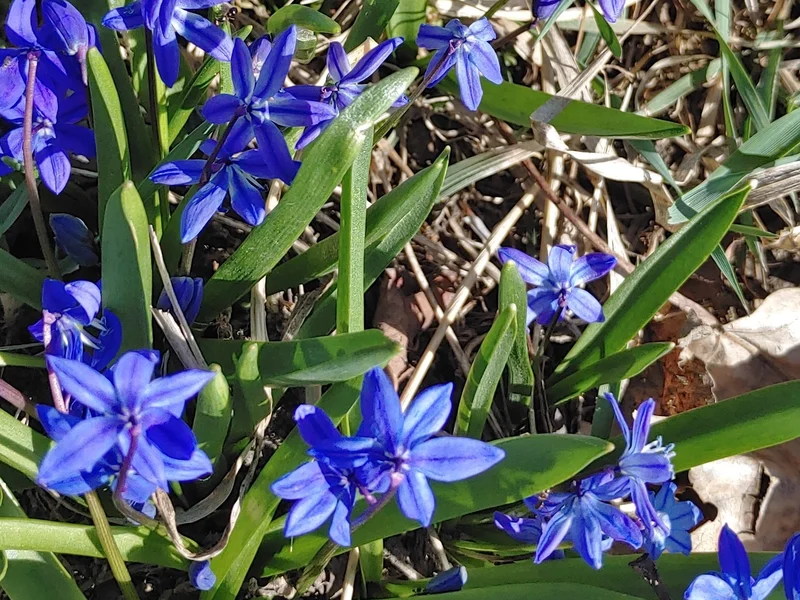
Siberian Squill (Scilla siberica) is a flower that grows well in UK gardens. One of the most intense blues in the garden. Naturalises freely in grass and borders. This guide covers when and how to sow Siberian Squill, the soil and position it likes, watering and feeding, companion planting, and when to harvest.
When to sow & grow Siberian Squill
Sowing and harvest window through the year (UK):
Jan | Feb | Mar | Apr | May | Jun | Jul | Aug | Sep Plant | Oct | Nov | Dec |
Soil, position & care
- Soil
- Free-draining soil; bulbs rot in waterlogged ground
- Soil pH
- 6.0–7.5
- Position
- Sun to dappled shade; many naturalise under deciduous trees
- Sowing depth
- 2–3× the bulb height deep
- Spacing
- 2–3 bulb-widths apart
- Sowing
- Plant dormant bulbs in autumn (tulips best in November)
- Growing
- Little care needed; feed after flowering if naturalising
- Harvest & upkeep
- Let foliage die back naturally — do not tie or cut for 6 weeks after flowering
- Watch for
- Slugs on shoots; squirrels dig newly planted bulbs; narcissus bulb fly
Companion planting for Siberian Squill
No specific companion notes for this plant.
Add Siberian Squill to your free 12-month plan and get watering & sowing reminders — no sign-up needed.
Siberian Squill FAQs
How much sun does Siberian Squill need?
Siberian Squill prefers partial sun (3–6 hrs).
When should I plant Siberian Squill in the UK?
In the UK, plant Siberian Squill in September. Planting in this window gives the roots time to establish before the plant is asked to grow away.
Is Siberian Squill easy to grow?
Easy — good for beginners. One of the most intense blues in the garden. Naturalises freely in grass and borders.